Archivi tag: japan

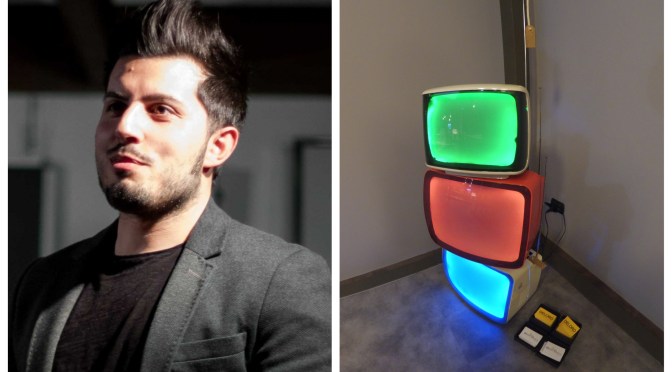
Upcycled televisions transformed into lamps: From Milan to Osaka through the theme of Design and Planet.

Christian Carlino is an Italian 33 years old designer who create some lamps starting from upcycled old televisions. Read the interview to discover where he finds his inspiration and other information about his project!

SOYC: “Christian, can you explain us what your project is about and how it can be considered sustainable?”

Christian: “Light and color, two fundamental states of our lives that govern and influence our existence. Each color influences in its own way what we are, how we live and the surrounding world. Starting from this reflection, I decided to give new life to some old and died iconic televisions to make them an integral part of our lives and to make sure that those interacting with them decide actively how the object should influence to us in a positive way. Each lamp is a unique object, the result of careful research of models and materials, with the aim of safeguarding a historical memory of the design of many models produced around the ’60s and’ 70s that at the time carried out their social function being also transportable objects. Everything is made in an artisan way and each model is linked to a record / artist that has marked the history of music from the 60s to 2001, the year of the first historical decay of the new millennium.”

SOYC: “How was born your idea?”

Christian: “The idea was born with the aim of finding a solution to reuse old televisions that I had collected at my vintage-style studio that remained unused; after a careful reflection on the use of furniture that the object itself covers today, I come to the conclusion that it is not acceptable that there are objects that after having undergone a careful design phase end up completing their life all ‘inside of landfills or thrown where it happens.”

SOYC: “And what did inspire you?”

Christian: What inspired me can be found in the power that the energy fields and the frequencies have on us as human beings. Every vibration, every color, every object, whatever is present on this planet influences our lives. I asked myself how I could find a way through which the interlocutor was no longer a passive subject, but became himself the actor of his own life, leaving to him every choice and every joy in choosing through colors which feeling or emotion he wanted to live in this moment. I combined all this in a historical-cultural research that put the individual in the center thanks to the light, the colors and our inner power and also laid the foundations for the diffusion of a culture of reuse towards the goal of ever greater respect towards nature for a more ethical and less wasteful future.


Follow us on Facebook to keep on reading about the YDD 2018 participants!
Three YDD designers talk about their Projects and Sustainability: Watch the video!

Let’s go on discovering the other designers’ answers to the question “What is your project and why it can be considered sustainable?“.

Today we are going to hear from:

  • Sara Vignoli, with her project MO.NAT;
  • Vincenzo Sorrentino and his Next Pot;
  • Michele Tunzi (from the team composed also by Emanuele Matteucci and Giovanni Silvestri) who talks about the project Akabei.

Here the video, enjoy it!

http://https://www.youtube.com/watch?v=kc-1qokfzM8


Do not miss other news like this and follow us on Facebook!

Cardboard-made lounge chair: a 100% sustainable and recycled project from Milan to Osaka Youth Design Day

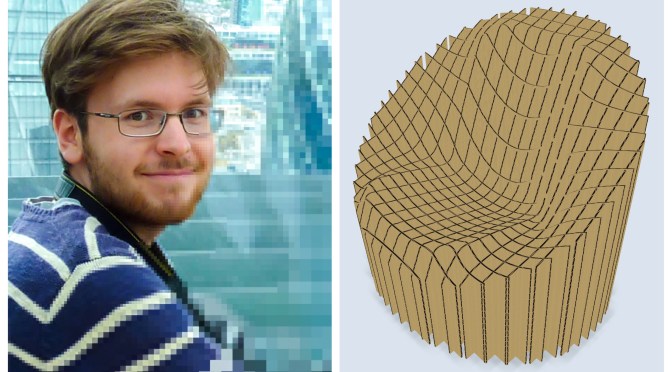
Alessandro Azzolini is a young Italian Architectural Design student at Politecnico di Milano. He designed a lounge chair which is completely made of recycled cardboards.

Here the interview we had with him!

SOYC: “Alessandro, can you talk about your project and its sustainability dimension?”

Alessandro: “My project consists of a lounge chair completely made of regenerated corrugated cardboard sheets that are laser-cut and assembled together with interlocking joints. Carboard is a very eco-sustainable material since it comes from renewable sources and can be recycled. The interlocking joints make the structure stable and allow to completely avoid the use of glue in a way to keep the 100% recyclabilityIt can be assembled in a quick way directly by the final user and it can be easily disassembled and stored flat in a way that occupies the least amount of space.”

SOYC: Why did you decide to design your chair?”

Alessandro: Because it is very economical since it uses waste material that can be obtained for free and because overall the chair has a very low environmental impact.
The choice of material and the easiness of (dis)assembly make this product perfect as a temporary furniture. When the chair’s lifecycle has ended, either because it has been damaged or the user wants to change it (since the contemporary world is very fast in consumption), the cardboard can just be thrown into the paper trash bin without problems and without worrying about the impact on our planet resources (since the reused cardboard of the chair would in any case have headed to the paper waste).”

SOYC: What did inspire your design concept?

Alessandro: “The design takes inspiration on one side from the shape of those ergonomic plastic seating that are meant to maximise comfort and on the other side from the metal grid-structure chairs, which I was sceptical about but after testing them in my life I realised they were comfortable indeed. The seating shape is lofted to form a circle, that in the base forms an elliptical footprint.
The chair components can be made out of 16 sheets of cardboard measuring 1x2m or either from 34 sheets of 1×1,2m. The dimension of sheets used is flexible and the number of sheets depends on it.”


Follow us on Facebook to discover the other designers’ projects!

BAMBOO: SUSTAINABLE MATERIAL FROM THE YOUTH DESIGN DAY IN JAPAN 2018

Technically a grass, bamboo has been used in decorations and many other assortments, but has only recently been used on a large scale for very different uses. Perhaps thanks to the sustainable movement, the material has become increasingly popular.

The benefits of bamboo are many fold. This material is a very fast growing, renewable and easy-to-grow resource. It is an extremely versatile material with countless uses including construction, clothes, food and fuel. Moreover, bamboo has anti-bacterial properties and is water resistant that makes it a great building material.

There are over 1000 species of bamboo. This amazing plant grows in tropical and temperate environments and is very hardy, not needing pesticides or herbicides to grow well. It is a type of grass and grows from its roots, when it is cut it quickly grows back with most species maturing in 3-5 years.

Some facts about the sustainability of bamboo are:

  • It is grown without pesticides or chemical fertilisers
  • It grows rapidly and can be harvested in 3-5 years
  • It produces 35% more oxygen that an equivalent stand of trees
  • It is a critical element in the balance of oxygen and carbon dioxide in the atmosphere
  • It is an excellent soil erosion inhibitor
  • It grows in a wide range of environments
  • It’s production into fibres has lower environmental impact than other forms of fibre, especially synthetic ones.

Two are the projects which were inspired by the great sustainability features of bamboo and that will be presented in Japan during The Youth Design Day 2018 edition.

Both the two projects were selected because of their purpose, which has always been dear to Japan and its culture: using sustainable material to create something useful to people and to planet.

One of these projects is by two young Czech Design students:

Daniel Skoták and Patrik Rešl

Daniel Skoták
Patrik Rešl

Daniel is 21 years old, while Patrik is 26. These two guys project uses bamboo as the main material of an object which takes up a very important space in our daily lives.

Here what they told us while talking about their project:

Bamboo was chosen as the material because it is fast-growing, which lessens the negative impact on its environment. It is also carbon-neutral, because it absorbs carbon dioxide while it grows. We want to support and join the ever-growing movement of sustainable design, as this is an element of products that consumers are increasingly looking for.


The other project is by a group of Irish and English designers:

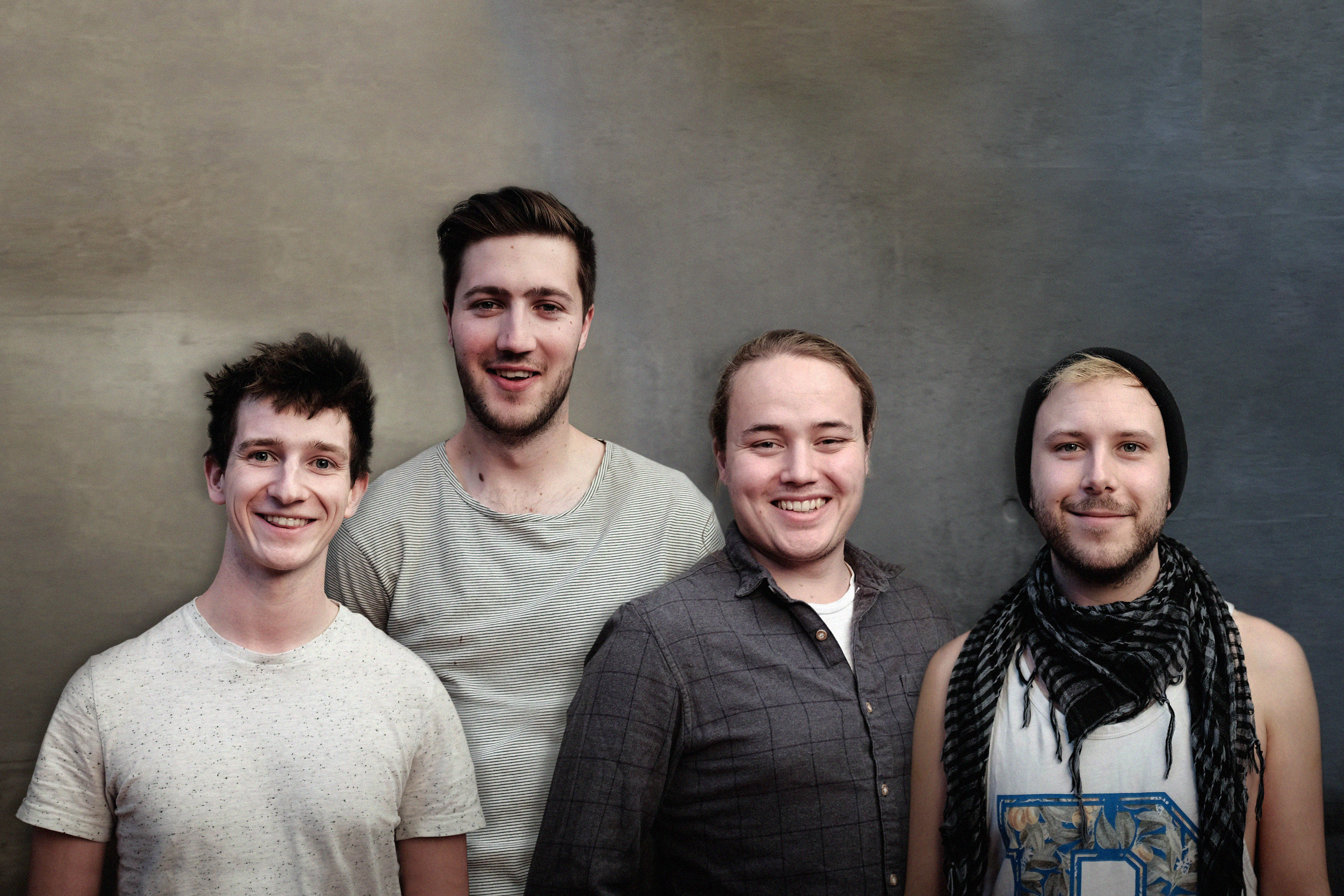
Jack Lehane, Jason Ladrigan, Seán Conlan-Smith and Alastair Brook

From left to right: Jack Lehane, Jason Ladrigan, Seán Conlan-Smith and Alastair Brook

They are 24, 24, 26 and 26 and the founders of the DSGN movement, which is a new project pioneered by an international network of student designers. Alongside their sister organisation, MEDS Meeting of Design Students, they have brought creative students from across 45+ international countries together, labouring with love on architecture, design, art, film, photography, and media projects at their annual workshops.

The design which won the competition and which DSGN are implementing and constructing in Bali is by two Polish Architecture Students:

Ewelina Andrecka and Hanna Haczek

Left: Ewelina Andrecka, right: Hanna Haczek

This is what they said about their projects:

The […] is designed in such a way that it gives the impression of a perfect balance with the surrounding nature. It is divided into three sections by mobile walls- frames filled with bamboo, a sustainable material. […] Simplicity is key here and usage of local building materials and plain environmental solutions play a significant role in achieving harmony with the environment.


If you want to discover all about these projects, do not give up following us!

Visit our Facebook page for constant news:

https://www.facebook.com/switchonyourcreativity/

SUSTAINABLE MOBILITY: A KEY POINT CONNECTING MILAN TO OSAKA YDD 2018

Sustainable mobility is the mobility model that enables movement with minimal environmental and territorial impact.

Nowadays there are very different kind of transport vehicles we can choose between to move around the city. We can go to school, to office or wherever we want to go by car, bus, underground, motorcycle, taxi and so on.

All these kinds of vehicles contribute to pollution level’s growth.

Mexico City

The challenges associated with growing traffic, especially in cities, are significant and threaten to become insurmountable. And despite the wide range of ways to get around, there have never been so many people who lack access to transportation or the means to use transportation.

Yet another impact was an increase in sedentary lifestyles, causing and complicating a national epidemic of obesity, and accompanying dramatically increased health care costs.

As the interest and the sensitivity towards pollution problems and sustainability are increasing among society, much are the less polluting solutions that were born (car and bike sharing to mention some).

Sustainable mobility is the purpose which guides Clementina Chiarini and Nicolò Cellina in the project they presented us for The Youth Design Day 2018 edition.

Clementina Chiarini and Nicolò Cellina

Clementina and Nicolò are 24 and 25 years old and are two Italian Architecture students.

The two young students are very glad for the opportunity that we gave them to bring their project in a country which has always considered the theme of sustainable mobility as something truly necessary for the planet’s need to reduce pollution.

In fact, Japan was one of the first countries to internationally highlight the importance of adopting more eco-sustainable behaviors.

Here what they say about their Sustainable Mobility project:

A […] is what you need to move around the city: no traffic, no pollution and no sedentary people! It is special because it is craft made. It is a prototype based in a digital model that you can customize according to your body and your tastes.


Continue to follow us to discover how Clementina and Nicolò developed their idea of Sustainable Mobility to make it more accessible!

Brand New Youth Design Day 2018 participants!

Let’s go on discovering new Youth Design Day in Japan 2018 participants. Those of today are two groups and two single designer.

All the four design projects are linked, even if in different ways, to the “Sustainable Interior Design” theme we talked about a little while ago.

We will talk extensively about their projects in a few articles. Now, instead, we are focusing on the partipants. Let’s start from the single one:


Christian Carlino

Christian Carlino

Christian is 33 years old and he’s from Italy. He earns a Degree in Information Technology and Web Design.

Here what he told us about his project:

What inspired me can be found in the power that the energy fields and the frequencies have on us as human beings. Every vibration, every color, every object, whatever is present on this planet influences our lives.


Alessandro Azzolini

Alessandro Azzolini

Alessandro is 20 and comes from Italy.  He studies Architectural Design at Politecnico di Milano.

Below his words describing the design concept:

The concept originates both from the idea of regenerating waste in a way to get a newly usable product and also from the do-it-yourself movement.
In every city, especially in industrial or retail areas, lots of […] are thrown away after their single use. I wanted to do something with them and give them a new life before they are headed to the recycler.


Emanuele Matteucci, Giovanni Silvestri and Michele Tunzi

Emanuele Matteucci
Giovanni Silvestri
Michele Tunzi

Emanuele, Giovanni and Michele are all 20 years old and come from Italy. They are university colleagues and study Design of the Industrial Product at Alma Mater Studiorum in Bologna.

These are the words they told us while talking about their project:

This way we save resources both on material, because there is no waste, and industrial treatments.
Furthermore, we built […] starting from a scrap of metal found as a reject in a mechanical workshop, therefore we can say that it is 100% recycled from other processes’ waste.


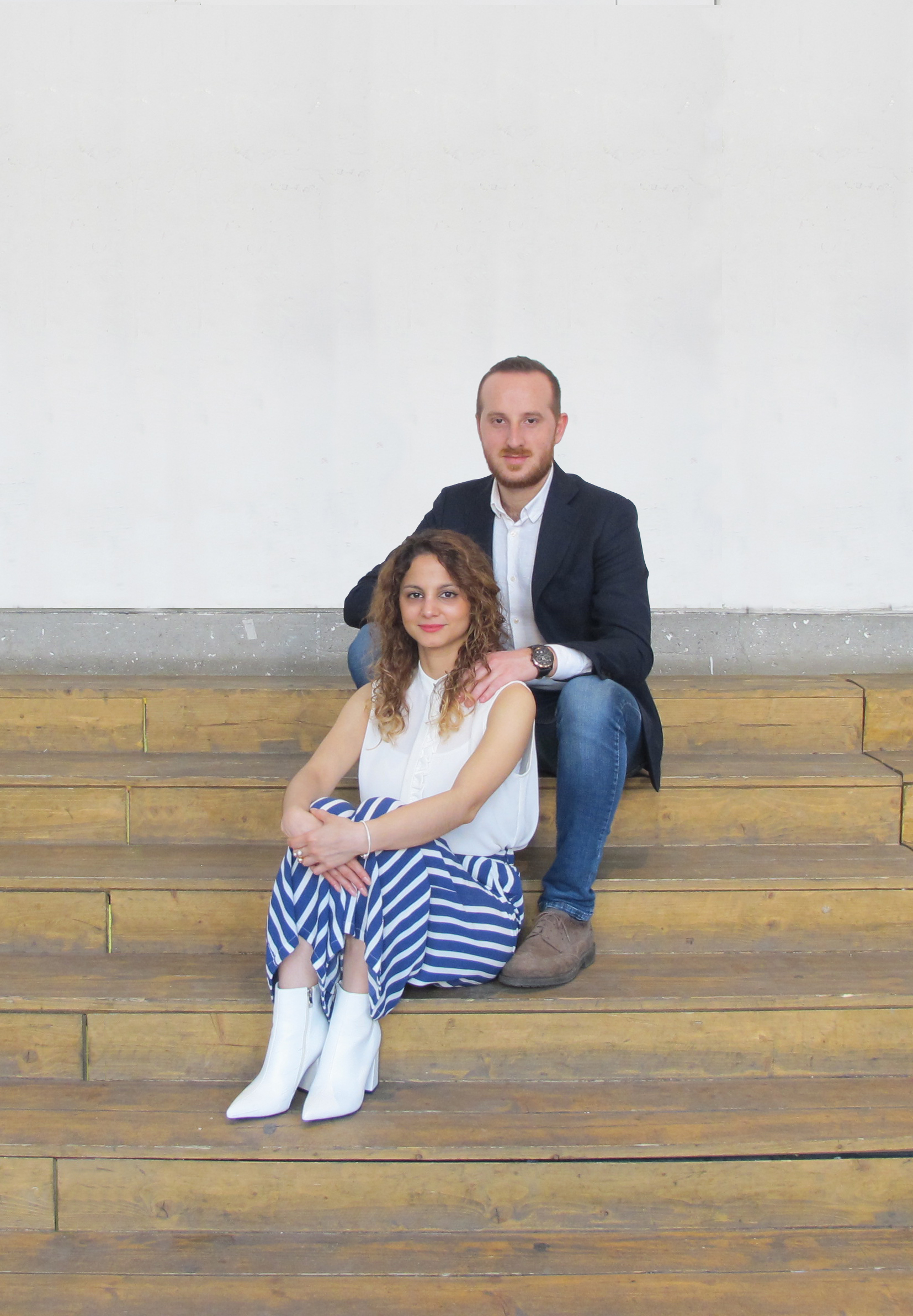
Dario Ivone and Monir Kazemian

Dario Ivone and Monir Kazemian

Dario and Monir are a couple. He is 28 years old and Italian, she is 31 and Iranian. Dario has a Degree in Management Engineering, while Monir a Degree in Architectural Design.

This is what they told us about the project they have developed together:

The elegant geometry and cutting leading to characterize the three shapes, giving new interpretation and defining them as a set of design icon which will elevate the atmosphere of your place and would give your room a modern vibe.


Do not miss the others and continue to follow the Switch On Your Creativity Facebook-page for constant news and our site for more deepened information about participants!

https://www.facebook.com/switchonyourcreativity/

Sustainable Interior Design: one of the main themes of The Youth Design Day 2018

Within the numerous design projects we have collected for The Youth Design Day in Japan 2018 edition, there are some which can be categorized under the theme of “Sustainable Interior Design”. But how can Interior Design be sustainable?

Sustainable interior design creates interior spaces using design principles such as functionality, accessibility, and aesthetics and expands the focus to include environmental considerations.

For example, sustainable design projects are influenced by such factors as planning efficient use of space, choosing materials with low environmental impacts, and reducing energy consumption, pollution, and waste.

Sustainable interior design aim is that to balance aesthetics and functionality with choices that reduce the environmental impact of their designs.

From a sustainability perspective, it’s very important to pick materials and products with the lowest environmental impact. Organic materials (e.g. wood, wool, natural stone) seem the obvious choice, but we mustn’t forget that natural resources need to be treated responsibly. Choose materials that are quickly renewable (such as fast-growing bamboo), and are extracted in an environmentally responsible way.

The environmental impact of materials and products must be evaluated throughout their entire life cycle — from extraction, production, transportation and processing, all the way to how they are discarded after use.

Interior designers have a lot of power in their hands when it comes to waste reduction, and at the same time, a big responsibility to act sustainably. The planet’s precious resources are limited, so the mentality of discarding products as soon as they go out of style and replacing them with those that are currently trendy is no longer justifiable.

Fortunately, the world of design is becoming increasingly aware of the need for sustainable thinking and is experiencing a growing interest in sustainable trends, such as recycling, upcycling and repurposing. Instead of discarding ‘’old-fashioned’’ objects while they are still functional, designers can (and should) come up with creative ways to give them a new life.


Follow us to discover the themes of the other projects that were chosen to participate to The Youth Design Day in Japan 2018!

https://www.facebook.com/switchonyourcreativity/


LET’S DISCOVER NEW YOUTH DESIGN DAY IN JAPAN PARTICIPANTS!

Let’s go on discovering some of the other names that will participate to the Youth Design Day 2018 in Japan. Today’s artists are both Italian and deeply sustainability driven in the projects they will introduce to us.

They are Sara Vignoli and Alessio De Stefano.


Sara

Sara Vignoli is 31 and comes from Sardinia, Italy. She has an International II Level Master’s Degree in Architecture.

These are some of the words she told us when speaking about her project:

Living and working with plants improve air quality, make people more creative, more productive, and reduce stress.  Pots and green walls are the most usual solution to bring nature in our lives, […] was born to create an innovative way to solve this problem.


Alessio

Alessio De Stefano is an Italian artisan ad he’s 30 years old.

Here what he told us about his project:

The idea was to build a beautiful object, with a vintage touch, meant to be useful and not only decorative.
[…] 
A natural amplifier that will never run out of energy. But also a nice item that invites everybody to play with it.


Do not miss the others and continue to follow the Switch On Your Creativity Facebook-page for constant news and our site for more deepened information about participants!

https://www.facebook.com/switchonyourcreativity/

LET’S DISCOVER THE YOUTH DESIGN DAY IN JAPAN PARTICIPANTS!

As anticipated last Friday, here are unveiled the names of the first two participants in our contest The Youth Design Day in Japan 2018:

They are Florian Van De Voorde and Vincenzo Sorrentino, two young designer who deal with subjects that are very different from each other.

We want to leave you hanging a little more, so we won’t tell you all about them. You will discover it by continuing to follow us.


Florian

Florian Van De Voorde is 22 years old and comes from Belgium. He studies Interior Design at the LUCA School of Arts in Ghent.

Let’s find out what inspired this young artist in his design and sustainability project, which will be presented in Japan. Here are his words:

“Last year – from august to october 2017 – I did my internship in Onbetaalbaar. This is a community of craftsmen (and women) who like to invite people to think about a more sustainable way about throwing away things and redefine what is thrash and what could be re- or upcycled.  During this internship I got the chance to develop my first prototypes. This formed the base on which I made these pieces.”


Vincenzo

Vincenzo Sorrentino is 25 years old and he’s Italian. He has a Bachelor in Design & Communication and a Master in Food Design.

Here, instead, is what inspired Vincenzo in his project on the theme of sustainable design:

“Everything started with this question: can the shape of the plate change my eating behaviours and my approach to food? My reflection and my research drove me to the conclusion that in the world different culture eat different kind of food but in the same round plate and so I experimented new shapes trying to re-create new rituals.”


Now that you know the first two participants, do not miss the others and continue to follow the Switch On Your Creativity Facebook-page for constant news and our site for more deepened information about participants!

https://www.facebook.com/switchonyourcreativity/

VIDEO FINALISTI DELL’11 GIUGNO / SELECTED VIDEOS FOR 11 JUNE SCREENING

Save the 3rd date 11 June 2015 Punto Enel Milan h 06.30 p.m. the last six finalist are:

Continua a leggere VIDEO FINALISTI DELL’11 GIUGNO / SELECTED VIDEOS FOR 11 JUNE SCREENING